
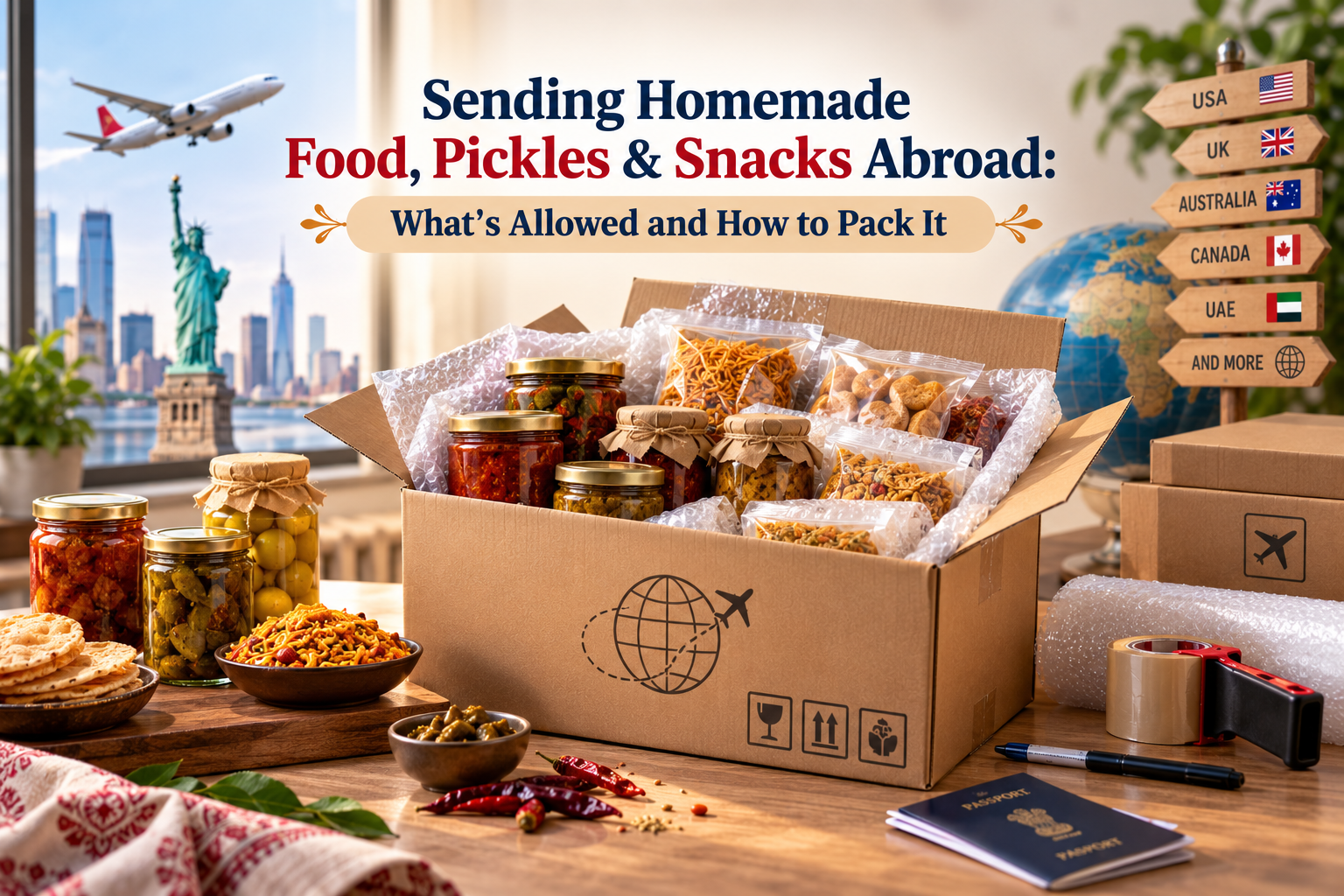
Sending Homemade Food, Pickles & Snacks Abroad: What's Allowed and How to Pack It
There is nothing quite like the taste of home, and for many NRI families, a box of mummy's achar or homemade farsan means more than any store bought gift. But food items are also one of the trickiest things to courier internationally. Between customs rules, leakage risk, and shelf life, one wrong packing choice can mean a jar arrives broken or a parcel gets held at customs. Here is a simple, practical guide to sending homemade food abroad the right way.
Why Food Shipments Need Extra Planning
Unlike clothes or gifts, food items are checked more closely by customs, especially entering the USA, where agricultural and food safety rules are strict. On top of that, food travels through several hands and a long journey before reaching your family's doorstep, which means packaging needs to survive rough handling, temperature changes, and time. Planning ahead for both customs and physical protection is what makes the difference between a parcel that arrives fine and one that causes problems.
What You Can Generally Send
Most dry, sealed, and shelf stable homemade food travels reasonably well. This typically includes:
- Dry snacks like chevdo, sev, and other farsan items
- Homemade or packaged papad
- Dry masalas and spice mixes in sealed containers
- Sweets that do not require refrigeration, such as mathiya or dry ladoo
- Pickles and achar packed correctly in sealed, leak proof jars
These items are commonly sent by NRI families, but rules can still vary depending on ingredients and the destination country, so it is always worth checking with your courier before packing large quantities.
What Usually Faces Restrictions
Some food items are either restricted or closely scrutinised, particularly for shipments into the USA:
- Fresh fruits, vegetables, and anything perishable
- Dairy based sweets or items that need refrigeration
- Meat or meat based products
- Homemade items containing fresh dairy, like certain mithai
- Large commercial quantities that look like they are for resale rather than personal use
Rules differ between the UK and USA, and they can change, so it is best to confirm with our team what is currently allowed before you send anything you are unsure about.
How to Pack Pickles and Achar Without Leaks
Pickle jars are one of the most common reasons for damaged parcels, simply because oil and masala mixtures leak if not sealed properly. Follow these steps to avoid a mess.
1. Use Fresh, Undamaged Jars
Check that the jar or container has no cracks and that the lid seals tightly. Glass jars carry more breakage risk than sturdy plastic containers, so plastic is often the safer choice for shipping.
2. Seal the Lid with Tape
Even a tightly closed lid can loosen during transit. Wrap tape around the rim of the lid to keep it firmly shut throughout the journey.
3. Double Bag Each Container
Place the sealed jar inside a zip lock bag, then inside a second bag. This way, even if oil does leak, it stays contained and does not touch other items in the box.
4. Wrap in Cushioning Material
Wrap each jar in bubble wrap or old newspaper before placing it in the box, so it does not knock against other items and crack during handling.
5. Pack Jars Upright and Separated
Keep jars standing upright inside the box, with soft padding between each one, rather than stacking them directly on top of each other.
How to Pack Dry Snacks and Farsan
Dry items are easier to ship than pickles, but they still need protection from crushing and moisture.
- Use airtight containers or thick zip lock bags rather than thin plastic bags that can tear
- Add a layer of bubble wrap around delicate items like papad, which can crack easily
- Fill empty spaces in the box with crumpled paper so items do not shift and crush each other during transit
- Avoid packing dry snacks next to heavy or sharp objects in the same box
Labelling and Customs Declaration
Write an honest, clear description of the contents on the customs form, such as "dry snack food" or "pickle, personal use". Vague or missing descriptions are one of the main reasons food parcels get held for inspection. If you are shipping a mix of items, it also helps to list them so customs officers can quickly see what is inside without needing to open the box.
Shipping Homemade Food from Ahmedabad
We regularly help families in Ahmedabad, Nadiad, and nearby cities send homemade food, pickles, and snacks to relatives in London, Leicester, Birmingham, Manchester, Wembley, and across the USA. Our team can guide you on what is currently allowed for your destination and help you pack fragile jars safely with our door to door service.
Frequently Asked Questions
Can I send homemade pickle to my son in the USA?
Homemade pickle packed in sealed, leak proof containers is commonly sent, but rules around ingredients can vary, so it helps to check with us before shipping in large quantities.
What is the best container for shipping achar?
A sturdy plastic jar with a tight sealing lid is safer than glass, since it is less likely to crack during transit and handles rough handling better.
Can I send fresh mithai or sweets abroad?
Sweets that need refrigeration or contain fresh dairy are generally not suitable for international shipping. Dry sweets like mathiya or dry ladoo hold up much better.
How do I stop pickle jars from leaking in transit?
Tape the lid shut, double bag the jar in zip lock bags, and wrap it in cushioning material before placing it upright in the box.
Will customs open my food parcel?
Customs can open any parcel at their discretion, and food items are checked more often than other goods. A clear, honest description on the form reduces the chance of delays.
Can I mix pickles and dry snacks in the same box?
Yes, but keep pickle jars well sealed and separated from dry items, so any accidental leakage does not spoil the snacks.
How long does homemade food shipping take to the UK or USA?
Delivery generally takes around 6 to 9 working days through standard shipping, though this can vary depending on customs processing at the destination.
Is there a weight or quantity limit for food shipments?
Large commercial quantities may raise questions at customs. For personal, family sized quantities, shipments generally move without issue.
Send a Taste of Home Safely
Not sure if what you want to send will make it through customs in one piece? Talk to us before you pack, and we will help you choose the right containers and documentation.
- Call us: +91 98245 06565
- WhatsApp us: +91 97238 06565
- Contact us for packing guidance
Related reads: What NRIs Can and Cannot Courier to the UK/USA | Packaging Tips for International Courier Services | About Shree Trivedi International
0 comments